
Federal Reserve
US stocks face tests from Fed decision, tech-led earnings deluge
A wobbly US stock market will take its cues in the coming week from a Federal Reserve meeting set to shed light on the path for i...
Gulf-times.com
Latest Federal Reserve news — FOMC rate decisions, Fed Chair Powell statements, monetary policy outlook, and market impact. Updated daily.
· 19 articles
A wobbly US stock market will take its cues in the coming week from a Federal Reserve meeting set to shed light on the path for i...
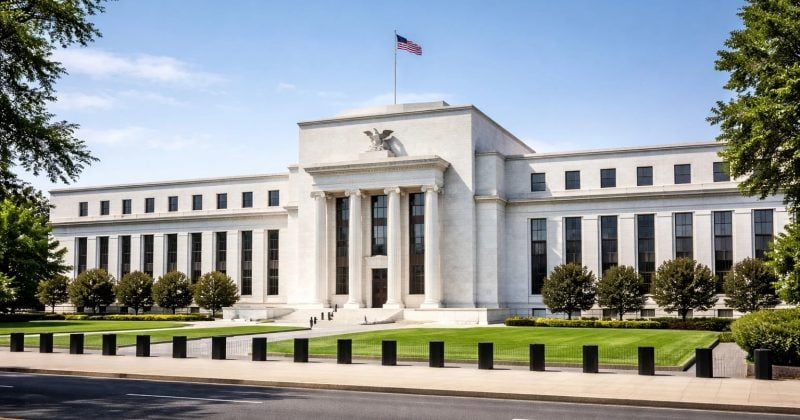
Fed Chair Kevin Warsh embraces constructive ambiguity ahead of the July FOMC meeting, with a 33% chance of a rate hike and no bailout promises The post Federal Reserve faces investor uncertainty ahead of policy decision as Warsh embraces ambiguity appeared fi…
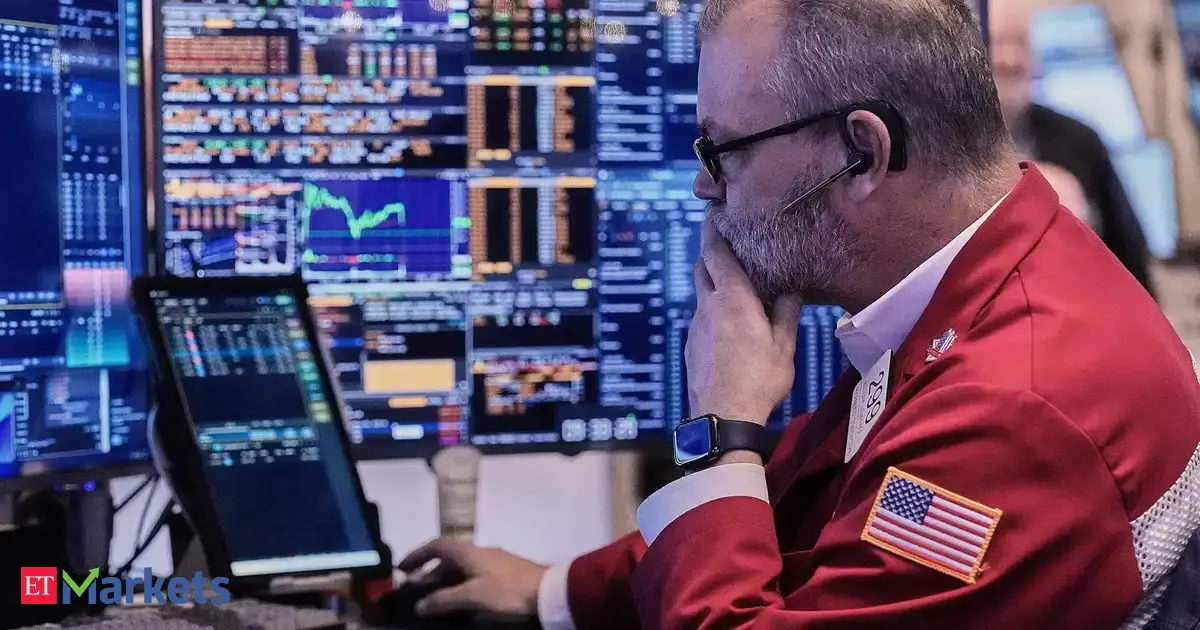
Investors await the Federal Reserve's interest rate decision and corporate earnings reports. Technology giants and artificial intelligence companies will release their quarterly results. Rising oil prices and inflation concerns add complexity to the economi…
KATHMANDU: Economic Digest presents a brief yet comprehensive roundup of major business developments in Nepal, delivered in clear and accessible summaries. Nepal’s economy displayed mixed signals, with positive movement in financial markets alongside persiste…

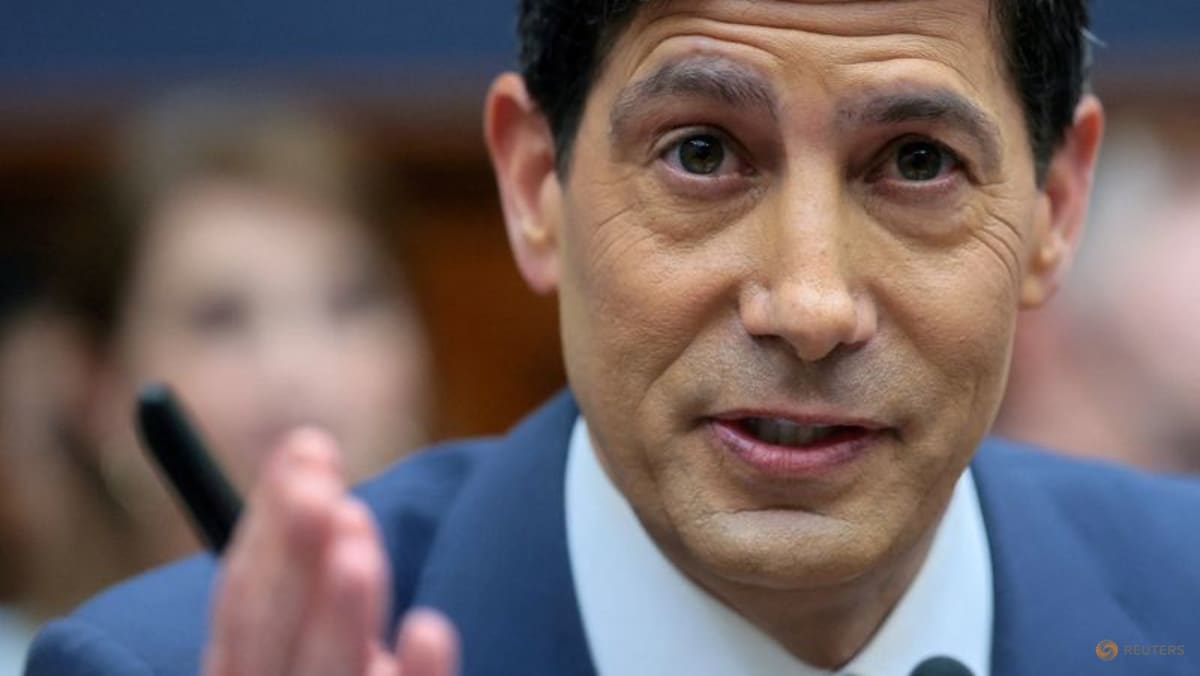
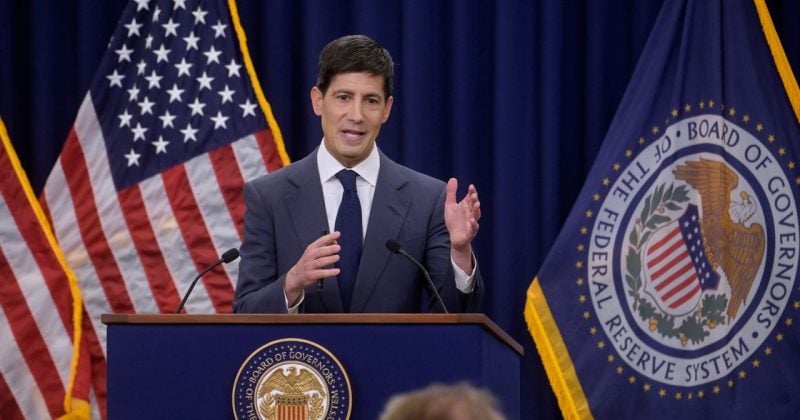



The Federal Reserve System, established by the Federal Reserve Act of December 23, 1913, is the central banking system of the United States. Unlike most central banks, the Fed has a dual mandate from Congress: maximum employment and stable prices. The 2% inflation target was formalized in January 2012. The Fed does not target a specific unemployment rate — its maximum employment goal is assessed in broad and inclusive terms.
The Fed's primary policy tool is the federal funds rate — the target range for overnight lending between depository institutions. Changes to this rate ripple through the entire economy: mortgage rates, auto loans, credit cards, corporate bonds, and currency valuations all move in response to Fed decisions. As of 2024, after the most aggressive tightening cycle since the early 1980s (525 basis points in 16 months, from March 2022 to July 2023), the Fed began an easing cycle. (Source: Federal Reserve FOMC statements.)
The Federal Open Market Committee (FOMC) has 12 voting members: 7 members of the Board of Governors, the President of the New York Fed (permanent voting member), and 4 of the remaining 11 regional Fed bank presidents on a rotating basis. All 12 regional presidents attend meetings and participate in deliberations — only 12 vote. (Source: federalreserve.gov, "About the FOMC.")
| Meeting Dates | Decision Announced | Press Conference | SEP Released |
|---|---|---|---|
| Jan 28–29, 2025 | Jan 29, 2:00 PM ET | 2:30 PM ET | No |
| Mar 18–19, 2025 | Mar 19, 2:00 PM ET | 2:30 PM ET | Yes |
| May 6–7, 2025 | May 7, 2:00 PM ET | 2:30 PM ET | No |
| Jun 17–18, 2025 | Jun 18, 2:00 PM ET | 2:30 PM ET | Yes |
| Jul 29–30, 2025 | Jul 30, 2:00 PM ET | 2:30 PM ET | No |
| Sep 16–17, 2025 | Sep 17, 2:00 PM ET | 2:30 PM ET | Yes |
| Oct 28–29, 2025 | Oct 29, 2:00 PM ET | 2:30 PM ET | No |
| Dec 9–10, 2025 | Dec 10, 2:00 PM ET | 2:30 PM ET | Yes |
SEP = Summary of Economic Projections (includes the "dot plot"). All times Eastern Time (ET). Source: federalreserve.gov.
| Cycle | Period | Rate Change | Context |
|---|---|---|---|
| Post-GFC Zero Bound | Dec 2008 – Dec 2015 | 0–0.25% (7 years) | Financial crisis recovery; ZLB policy |
| Gradual Tightening | Dec 2015 – Dec 2018 | 0.25% → 2.50% | 9 hikes over 3 years; QT began Oct 2017 |
| COVID Emergency Cut | Mar 2020 | 1.50–1.75% → 0–0.25% | Two emergency cuts in March 2020 |
| COVID Zero Bound | Mar 2020 – Mar 2022 | 0–0.25% (2 years) | QE4: balance sheet to $9T |
| Post-Pandemic Tightening | Mar 2022 – Jul 2023 | 0.25% → 5.25–5.50% | Fastest cycle since 1980s; 525bps in 16 months |
| Easing Cycle | Sep 2024–present | 5.25–5.50% → ~4.25–4.50% | Three 25bp cuts (Sep/Nov/Dec 2024) |
Source: Federal Reserve FOMC statements; FRED (St. Louis Fed) effective federal funds rate series (DFF). Historical data does not guarantee future performance.
30-year fixed mortgage rates correlate with 10-year Treasury yields, which respond to Fed policy expectations. A 100bp rate increase typically raises 30-year mortgage rates by 50-75bp, though the transmission is not mechanical and market conditions affect the pass-through.
Discounted cash flow models — the theoretical foundation of equity valuation — use interest rates as the discount rate. Higher rates reduce the present value of future earnings, especially for long-duration growth stocks. The effect is most pronounced for stocks with distant or uncertain cash flows (tech, biotech).
Bond prices move inversely to yields. When the Fed raises rates, existing bonds with lower coupons fall in price. Duration measures sensitivity: a 10-year bond with 7-year duration falls approximately 7% in price for each 1% rise in yields.
Higher US rates attract global capital seeking yield, increasing demand for USD. The DXY typically strengthens during tightening cycles. A stronger dollar pressures US multinational earnings (overseas revenues translate to fewer dollars) and can destabilize emerging market economies with USD-denominated debt.
Higher rates tighten financial conditions broadly. Corporate credit spreads — the premium companies pay above Treasuries — often widen as borrowing costs rise and debt servicing becomes more burdensome, particularly for high-yield (below investment grade) issuers with variable-rate debt.
Higher rates increase borrowing costs for consumers: mortgages, auto loans, credit cards (which are typically variable-rate). Reduced consumer purchasing power can slow GDP growth and corporate revenues, creating a feedback loop that moderates inflation — the intended mechanism.
Source: Federal Reserve Bank of San Francisco, "The Effects of Monetary Policy on the Economy." Academic references available at sf.frb.org.
Federal Funds Rate
The target interest rate range at which banks lend reserves to each other overnight. Set by the FOMC. The primary policy instrument of the Fed.
FOMC
Federal Open Market Committee — the 12-member body that sets US monetary policy. Meets 8 times per year. Votes on the federal funds rate target.
Dot Plot (SEP)
Summary of Economic Projections — each FOMC participant's anonymous forecast for the appropriate policy rate at year-end over the next few years and in the long run.
Quantitative Easing (QE)
Asset purchases by the Fed (Treasuries, MBS) that expand its balance sheet and inject liquidity. Used when the rate is near zero. Puts downward pressure on long-term rates.
Quantitative Tightening (QT)
Reduction of the Fed's balance sheet by letting assets mature without reinvestment or by outright sales. The opposite of QE. Tightens financial conditions.
Dual Mandate
The Fed's two congressionally-mandated objectives: maximum employment AND stable prices (2% PCE inflation). Unique among major central banks (ECB has only a price stability mandate).
PCE vs CPI
PCE (Personal Consumption Expenditures) is the Fed's preferred inflation measure — broader than CPI, uses chain-weighting, and better captures substitution effects. Core PCE excludes food and energy.
Neutral Rate (r*)
The theoretical federal funds rate that neither stimulates nor restricts the economy when it's at full employment with stable inflation. The long-run dot in the SEP approximates this. Currently estimated at ~2.5% by most FOMC members.
Forward Guidance
The Fed's communication about future policy intentions. Used to shape market expectations — even without changing rates, signaling future hikes can tighten financial conditions immediately.
Reserve Requirements
The percentage of deposits banks must hold as reserves. The Fed reduced reserve requirements to zero in March 2020, shifting to an 'ample reserves' operating framework.
Federal Reserve news is aggregated from third-party publishers. Vextor Capital is not the original publisher of these articles. Source: federalreserve.gov (official FOMC statements, meeting minutes, press conferences); FRED Economic Data (St. Louis Fed, fred.stlouisfed.org); BIS Working Papers; academic research cited by Federal Reserve staff.
Risk Disclosure: Interest rate changes by the Federal Reserve significantly affect all financial markets including stocks, bonds, currencies, and real estate. Past rate cycles are not predictive of future policy decisions. Economic conditions change rapidly. This content is for educational purposes only and does not constitute investment advice. Consult a qualified financial advisor before making investment decisions. (Source for risk factors: SEC Office of Investor Education and Advocacy; FINRA investor alerts.)
The Federal Reserve System is the central bank of the United States, established by the Federal Reserve Act of 1913. It operates with a dual mandate from Congress: to promote maximum employment and to maintain price stability. The implementation of this mandate through monetary policy tools affects interest rates throughout the U.S. economy and, through international linkages, global financial conditions.
Congress assigned the Federal Reserve two coequal objectives: maximum employment and stable prices. Unlike some central banks with a single inflation mandate, the Fed must balance these two goals explicitly. In 2012, the Federal Open Market Committee established a 2% target for the Personal Consumption Expenditures Price Index as the operational definition of price stability. The 2% target reflects the view that some inflation provides buffer against deflation, which is particularly damaging to economic activity. The employment goal does not have a specific numerical target, reflecting the Fed view that the maximum level of sustainable employment is determined by non-monetary factors and can change over time. The Fed revised its framework in 2020 to allow inflation to run moderately above 2% for some time to achieve more inclusive employment outcomes. (Source: Federal Reserve Board, Statement on Longer-Run Goals and Monetary Policy Strategy, 2020)
The Federal Open Market Committee, the body that sets monetary policy, consists of 12 voting members: the seven members of the Board of Governors in Washington, the president of the Federal Reserve Bank of New York who serves as permanent voting member, and four of the remaining eleven Reserve Bank presidents who rotate annually. The full FOMC meets eight times per year, though extraordinary meetings can be called by telephone between scheduled meetings. Meeting dates and post-meeting statements are publicly announced on a fixed schedule, allowing markets to price in expected decisions. The Fed Chair testifies before Congress twice annually under the Humphrey-Hawkins requirements, providing additional public accountability. (Source: Federal Reserve Board, FOMC Calendar and Meeting Materials)
The federal funds rate is the overnight rate at which depository institutions lend reserve balances to each other. The FOMC sets a target range for this rate, currently expressed as a range such as 5.25 to 5.50%, and achieves it through interest on reserve balances paid to banks holding reserves at the Fed. Changes in the federal funds rate transmit to borrowing costs throughout the economy with varying speed: prime rate changes immediately, credit card APRs follow within one to two billing cycles, mortgage rates follow with a 1 to 4 week lag for fixed rates and immediate adjustment for ARMs, and corporate bond yields follow within days. The full economic effect of rate changes on employment and inflation typically takes 12 to 24 months to materialize. (Source: Federal Reserve Board, Monetary Policy Report)
Open market operations are the primary tool through which the Federal Reserve implements monetary policy on a day-to-day basis. The New York Fed Trading Desk conducts OMO by buying or selling U.S. Treasury securities in the secondary market. Buying securities injects reserves into the banking system, putting downward pressure on the federal funds rate. Selling securities drains reserves, putting upward pressure on the rate. Since the 2008 financial crisis, the Fed has primarily operated in an ample-reserves environment where it controls the federal funds rate primarily through administered rates including interest on reserve balances and the overnight reverse repurchase agreement facility rate rather than through daily open market operations adjusting reserve supply. (Source: Federal Reserve Bank of New York, OMO Explainer)
At four of the eight annual FOMC meetings, the committee releases the Summary of Economic Projections, which includes individual member forecasts for GDP growth, unemployment, inflation, and the appropriate federal funds rate path. The rate forecasts, displayed as dots on a scatter plot, have become known as the dot plot and are closely watched by financial markets as a signal of future rate intentions. However, the SEP is explicitly not a commitment to a specific path, and actual rate decisions respond to incoming data. Research has shown that the median dot plot path has frequently differed from the actual rate path over subsequent quarters, particularly in periods of significant economic uncertainty. Markets also produce their own implied rate path through federal funds futures and overnight indexed swap pricing. (Source: Federal Reserve FOMC Meeting Materials, Federal Reserve Bank of New York)
Central bank independence from short-term political pressures is considered a foundational principle of effective monetary policy. Academic research, including work by Alberto Alesina and Lawrence Summers, has found that central banks with higher statutory independence produce lower inflation without sacrificing employment outcomes. The Federal Reserve derives its independence from Congressional statute rather than constitutional protection, meaning Congress can theoretically amend the Federal Reserve Act. The Fed Chair is appointed by the President and confirmed by the Senate to a four-year renewable term as Chair, with the Governor term being 14 years. The history of U.S. monetary policy includes instances of significant White House pressure on the Fed, most notably during the 1970s when political pressure contributed to accommodative policy and subsequent inflation. (Source: Alesina and Summers, Journal of Money, Credit and Banking, 1993)
The Federal Reserve rate decisions affect equity market valuations primarily through the discount rate mechanism. In the discounted cash flow valuation model, equity value equals the present value of all future free cash flows discounted at the cost of capital. When the risk-free rate increases as the Fed raises rates, the discount rate rises and the present value of future cash flows declines, mechanically reducing fair value estimates. This effect is most pronounced for long-duration assets such as growth stocks with minimal current earnings and high expected future earnings. Empirically, the S&P 500 fell approximately 19% in 2022 as the Fed raised the federal funds rate from 0.25% to 4.5%, though the magnitude reflected multiple factors including earnings concerns, not only the rate impact. (Source: Federal Reserve Board, Finance and Economics Discussion Series)
The bond market responds inversely to interest rate changes: when rates rise, existing bond prices fall; when rates fall, bond prices rise. The sensitivity of a bond price to rate changes is measured by duration, expressed in years. A bond with a duration of 7 years will decline approximately 7% in price for each 1 percentage point increase in interest rates. Long-duration Treasury bonds with 20 to 30 year maturities have durations of 15 to 20 years, making them highly sensitive to rate changes. The 20-year Treasury ETF TLT declined approximately 50% from peak to trough between 2020 and 2023 as the Fed executed the most aggressive rate-hike cycle in 40 years. Understanding bond duration allows investors to measure and manage interest rate risk in fixed income portfolios. (Source: Bloomberg Fixed Income Research, Investopedia Duration Explained)
The U.S. dollar tends to strengthen when the Federal Reserve raises interest rates relative to other central banks, because higher yields attract capital flows from international investors seeking greater returns. The mechanism: foreign investors must purchase U.S. dollars to invest in dollar-denominated assets, increasing demand for the currency. From March 2022 to October 2022, as the Fed hiked aggressively while other central banks moved more slowly, the U.S. Dollar Index rose approximately 20%, reaching a 20-year high. Dollar strength has secondary effects on commodity prices, which are predominantly priced in dollars and tend to fall as the dollar strengthens, affecting inflation in dollar-dependent economies. Dollar strength also reduces the dollar-denominated earnings of U.S. multinational corporations. (Source: BIS Quarterly Review, Federal Reserve International Finance Discussion Papers)
The Federal Reserve does not directly set mortgage rates, but its policy decisions transmit to mortgage rates through the Treasury market and the mortgage-backed securities market. The 30-year fixed mortgage rate historically tracks the 10-year Treasury yield with a spread of 150 to 250 basis points. When the Fed raises the federal funds rate, short-term Treasury yields rise immediately. Long-term Treasury yields rise to a lesser degree depending on expectations about future growth and inflation. During the 2022 to 2023 hiking cycle, the 30-year fixed mortgage rate rose from approximately 3.0% to over 7.5%, the fastest increase in the post-WWII era. This sharp increase significantly reduced housing affordability and contributed to a decline in existing home sales to levels not seen since the early 2000s. (Source: Freddie Mac Primary Mortgage Market Survey, NAR Existing Home Sales Data)
Forward guidance, the practice of communicating the likely future path of monetary policy, has been used by the Federal Reserve as an explicit policy tool since at least 2003. By signaling that rates will remain low for an extended period, the Fed can influence long-term interest rates even before actually changing the short-term rate, because long-term rates reflect expectations of future short-term rates. During the post-2008 period, the Fed employed calendar-based guidance such as committing to keep rates low through a specific date, and threshold-based guidance linking rate changes to specific unemployment and inflation outcomes. Research by economists including Michael Woodford has argued that in liquidity trap conditions where short rates are near zero, forward guidance may be the most powerful remaining policy tool. (Source: Woodford, Interest and Prices; Federal Reserve Board Speeches)
Federal Reserve policy affects the availability and cost of credit throughout the economy, with effects that extend well beyond Treasury markets. Bank lending standards, surveyed quarterly in the Senior Loan Officer Opinion Survey, track how readily banks are willing to extend credit to businesses and consumers. Historically, lending standards tighten following the beginning of rate hike cycles and loosen during easing periods. Tight credit conditions in 2022 to 2023 contributed to a contraction in commercial bank lending that affected small business financing, commercial real estate, and leveraged buyout activity. Credit spreads on investment-grade and high-yield corporate bonds widen when the Fed tightens, reflecting both higher base rates and increased default probability concerns as borrowing costs rise for indebted corporations. (Source: Federal Reserve Senior Loan Officer Opinion Survey, FRED Economic Data)